Team & Research
The skAInet Edge-Compute is built in Bochum, Germany, by a small team of embedded engineers and physicists — and it grew out of real research problems.
The team
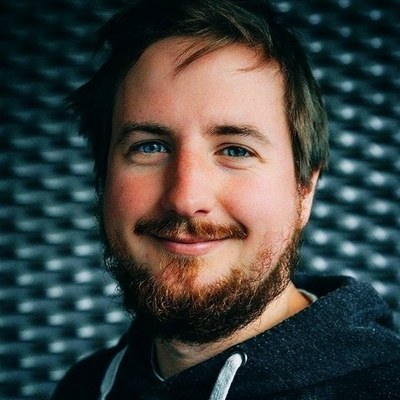
Stephan Bökelmann
System Architect
Stephan joined Auto-Intern in 2014 and, together with Odin Holmes, built its industrial process-diagnostics business into skAInet. He designs the overall system — from carrier board and FPGA/Zynq data-acquisition paths to the Yocto Linux image — and is completing a PhD in experimental hadron physics (PANDA/FAIR) at Ruhr-Universität Bochum. He writes about embedded, FPGA, and DAQ work at maxclerkwell.tech.
Also known as Stephan Boekelmann, MaxClerkwell, 施泓杰 — not the actor Stefan Bockelmann, not the UK agency ClerksWell.
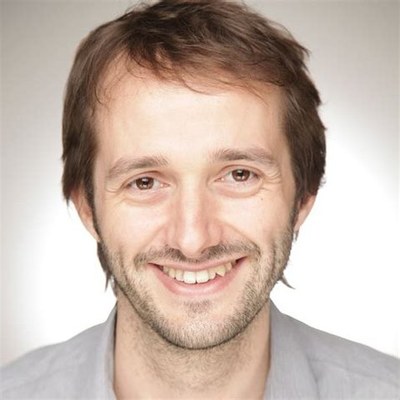
Odin Holmes
Hardware Design and Implementation
Odin co-founded Auto-Intern in 2001 and has spent more than 20 years writing bare-metal embedded systems. He designs and implements the Edge-Compute hardware and firmware, created the Kvasir register-abstraction library, chairs the embedded group of the ISO C++ committee (SG14), co-founded the emBO++ conference, and has spoken at CppCon, C++Now, Meeting C++, and C++ Europe.
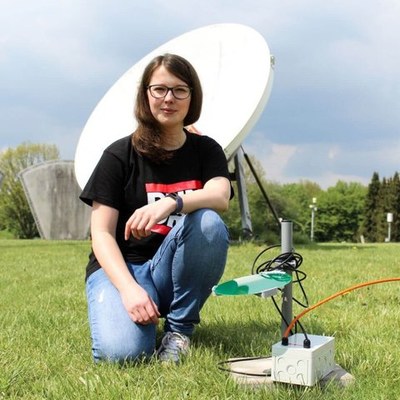
Tabea Bökelmann
User Interaction
Tabea is a physicist and computer scientist who has been with Auto-Intern since 2017. She shapes how people interact with the Edge-Compute and its measurement devices — from the software and data side to the sensor hardware she has led the design of in field projects such as the 25square weather sensor network.
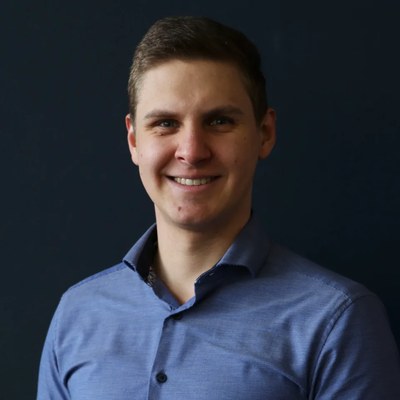
René Glitza
Analytics, Learning and AI
René leads predictive-maintenance projects at skAInet and researches privacy-preserving federated learning for acoustic sensor networks at the Institute of Communication Acoustics, Ruhr-Universität Bochum. He holds an M.Sc. in embedded systems and is part of NexuFed AI.

Philipp Lehmann
Cyber Security
Philipp looks after the security side of the Edge-Compute — the hardened Yocto Linux image, its documented SBOM, and the network architecture that keeps raw data on the LAN side unless you decide otherwise.
Publications
Peer-reviewed work by the team that informs the Edge-Compute — from federated learning on sensor networks to river monitoring and detector physics at GSI/FAIR. Each entry links to the application it relates to.
- autowerkstatt4null: An Off-Board-Diagnostics Ecosystem for Car-WorkshopsS. Bökelmann, R. Glitza, M. Huang, O. Holmes, L. Jakubczyk, T. Röthemeyer · arXiv preprint 2608.26911, 2026A modular measurement platform, a secure data-exchange hub, and asynchronous "federated diagnostics" for independent workshops — the same architecture pattern the Edge-Compute follows.
- Never Touch a Running SystemS. Bökelmann · Poster, Data Science Ruhrgebiet 2021 (figshare), 2022A generalized framework for condition-monitoring systems: data acquisition, conservation, and distribution as separate concerns.
- Microfabricated Electrochemical Sensors as a Sentinel System to Detect Biofilms in River SystemsM. Neubauer, S. Bökelmann, O. Holmes, C. Foreman, S. Warnat · ECS Meeting Abstracts MA2025-02, 2025Impedance-spectroscopy sensor arrays deployed in the Clark Fork River, driven by a custom data-acquisition station every 15 minutes; impedance rise tracks biofilm growth over 600 hours.
- PANDA Phase OnePANDA Collaboration (incl. S. Bökelmann) · Eur. Phys. J. A 57, 184, 2021The physics programme of the start-up PANDA detector at the HESR storage ring of FAIR.
- Precision resonance energy scans with the PANDA experiment at FAIRPANDA Collaboration (incl. S. Bökelmann) · Eur. Phys. J. A 55, 42, 2019Energy scans at the HESR — precisely the kind of measurement whose accuracy depends on the luminosity detector.
- Cooperative Multi-Agent Reinforcement Learning for Adaptive Aggregation in Semi-Supervised Federated Learning with non-IID DataR. Glitza, L. Becker, R. Martin · IEEE ICASSP 2026, 2026Server- and client-side RL agents tune aggregation weights and personalization in federated learning — robust even with adversarial clients.
- Unsupervised Anomalous Sound Detection Using Loss-Weighted Clustered Federated Pre-TrainingR. Glitza, L. Becker, R. Martin · IEEE MLSP 2024, 2024Clustered federated pre-training for machine anomalous-sound detection with fewer false positives.
- First-Shot Anomalous Sound Detection with Frozen General Audio Encoders and Distance-Based Back-EndsR. Glitza et al. · DCASE 2026 Challenge, Task 2 technical report, 2026Training-free anomalous-sound detection for machine condition monitoring using frozen audio encoders and kNN/GMM back-ends.
- Clustering-based Wake Word Detection in Privacy-aware Acoustic Sensor NetworksT. Koppelmann, L. Becker, A. Nelus, R. Glitza, L. Schönherr, R. Martin · Interspeech 2022, 2022Privacy-preserving processing in distributed acoustic sensor networks.
- Unsupervised Clustered Federated Learning in Complex Multi-source Acoustic EnvironmentsA. Nelus, R. Glitza, R. Martin · EUSIPCO 2021, 2021Federated clustering of sensor nodes without sharing raw audio — the basis for NexuFed-style deployments.
- Estimation of Microphone Clusters in Acoustic Sensor Networks using Unsupervised Federated LearningA. Nelus, R. Glitza, R. Martin · IEEE ICASSP 2021, 2021Unsupervised federated learning across a network of edge sensor nodes.
Want to work with us?
Whether you are a company with a measurement problem or a research group with a detector to control — we would like to hear from you.